

You know the feeling. Your alarm goes off and the first thing you do is brace yourself before your feet hit the floor. That sharp, stabbing heel pain when you take the first five steps of the morning. If you work on your feet, drive long routes, or spend your evenings in the gym, plantar fasciitis doesn't just hurt. It threatens your livelihood. You can't call in sick from your own body.
The frustrating thing is that most advice online tells you to rest. Lay off the standing. Stop running. Take six weeks off. If you're a nurse, a tradesperson, or someone who drives a rig five days a week, resting your feet for six weeks isn't a plan. It's a joke. What you need is a protocol that works around your schedule and actually reduces pain over time, not just on the one Saturday you managed to stay off your feet.
The footwear swap that makes the whole protocol stick
Every step in this protocol gets easier once your off-clock hours stop undoing your recovery. OOFOS OOahh slides redistribute your weight off the plantar fascia from the minute you clock out. Over 32,000 Amazon reviewers, 4.4 stars. Check what size is currently in stock.
Amazon Check Today's Price on Amazon →Step 1: Fix the First Five Steps of Your Morning Before You Even Stand Up
Plantar fasciitis hurts worst in the morning because the fascia tightens while you sleep. Your foot is in a relaxed, slightly pointed position for seven or eight hours, and when you suddenly load it with your full bodyweight on a cold, contracted band of tissue, you get that ripping heel-pain sensation. The fix is not complicated, but you have to do it before your feet touch the floor.
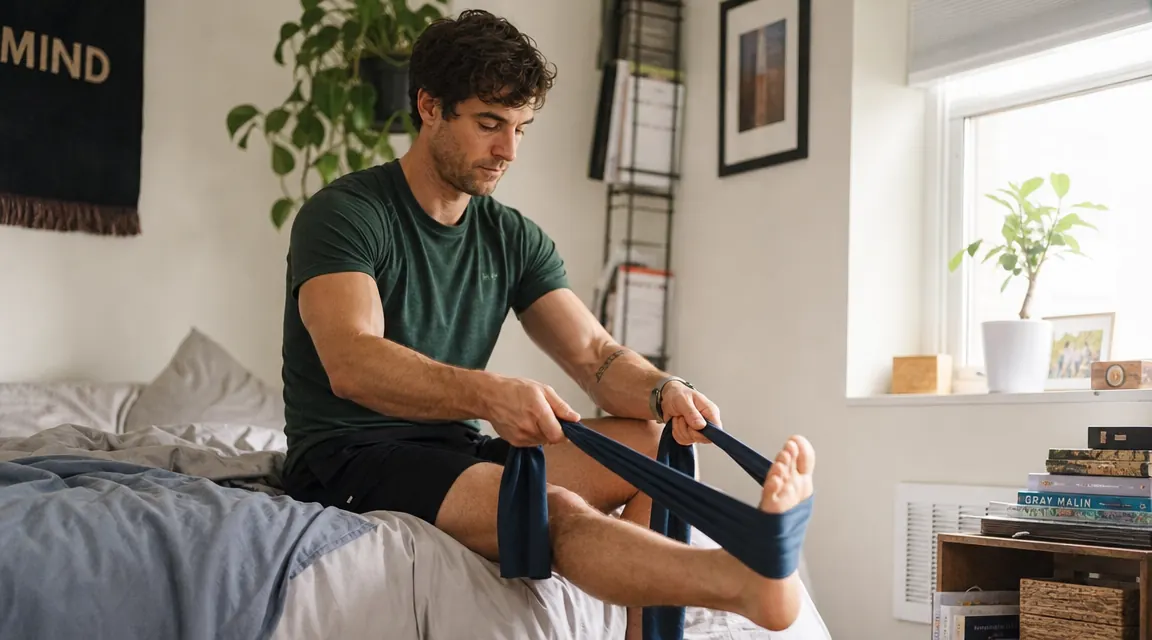
Sit up and reach down to the ball of your foot. Use a towel, a resistance band, or just your hands. Pull your toes gently back toward your shin and hold for 30 seconds. Do three rounds. Then flex and extend your ankle ten times each direction. This pre-loads the fascia slowly before you ask it to carry your weight. Most people who do this consistently report that morning heel pain drops noticeably within the first week, even before any other changes. If you only do one thing from this entire guide, do this. Every morning, before your feet touch the floor.
If you sleep with a night splint, even better. A night splint holds the foot in a slightly dorsiflexed position so the fascia doesn't contract as aggressively overnight. They're not comfortable to sleep in at first, but after a couple of nights you stop noticing them. That said, the pre-stand stretch costs you nothing and can be layered on top of whatever you're already doing.
Step 2: Do a Five-Minute Calf and Arch Routine Before Your First Shift Step
Your calf muscle, specifically the gastrocnemius and the soleus, connects directly into the Achilles tendon, which connects into the heel. When the calf is tight, it pulls on everything downstream. Tight calf equals more tension on the plantar fascia all day long. Loosening that chain for five minutes before you start your shift or your training session takes real load off the heel, and the effects compound over weeks.
The two stretches that matter most: a standing wall stretch for the gastrocnemius (straight leg, heel on the floor, lean into the wall for 30 seconds each side) and a bent-knee version of the same stretch to target the deeper soleus. Add toe curls with a towel on the floor, which strengthens the intrinsic foot muscles that support the arch from below. Five minutes. Every morning, every shift day. Set a timer the first week so you don't rush it.
Tight calves are the hidden driver most people miss. Stretch the chain, not just the heel, and the pain starts to back off faster.
Step 3: Change What You Put on Your Feet the Moment You Clock Out
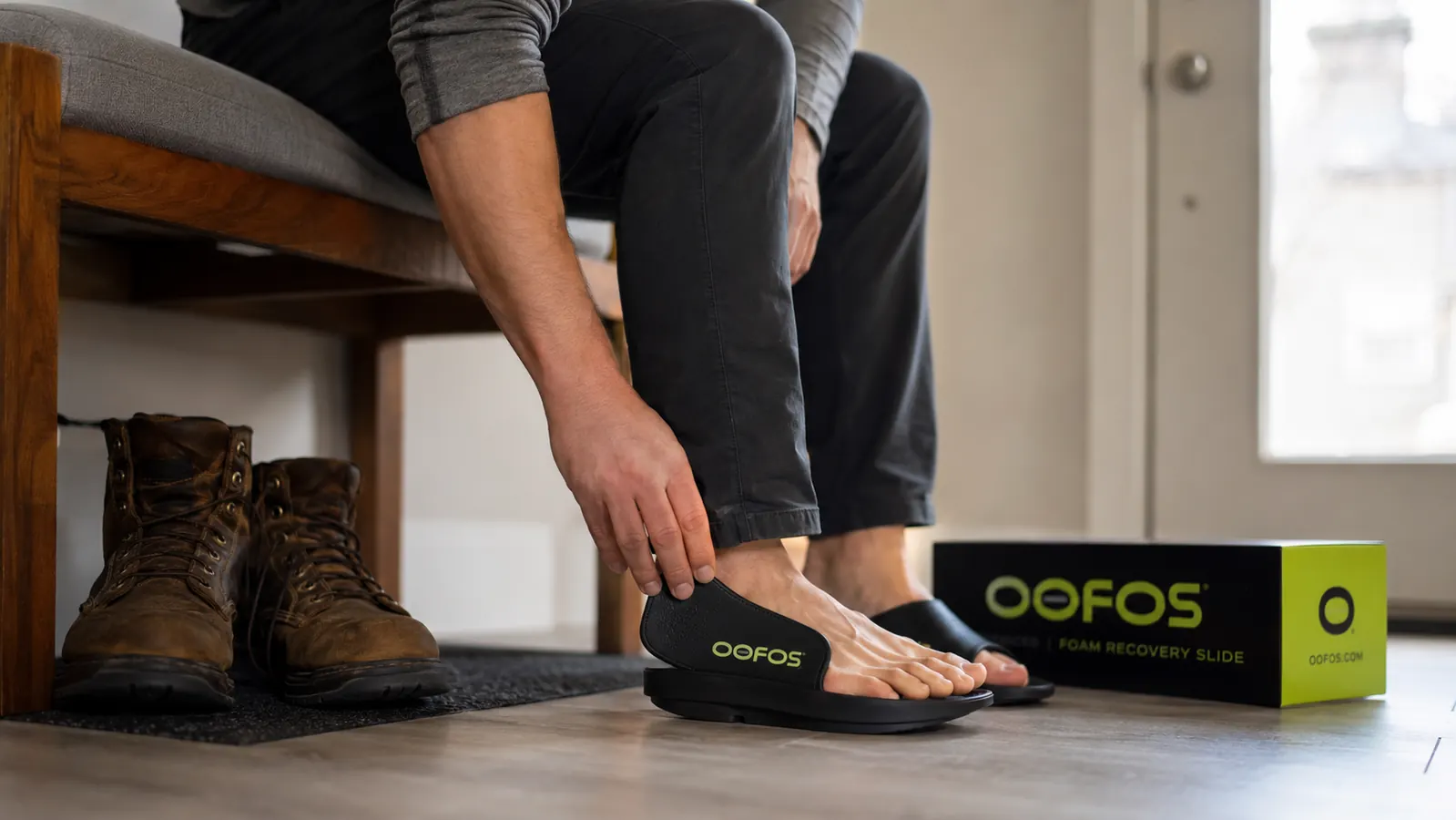
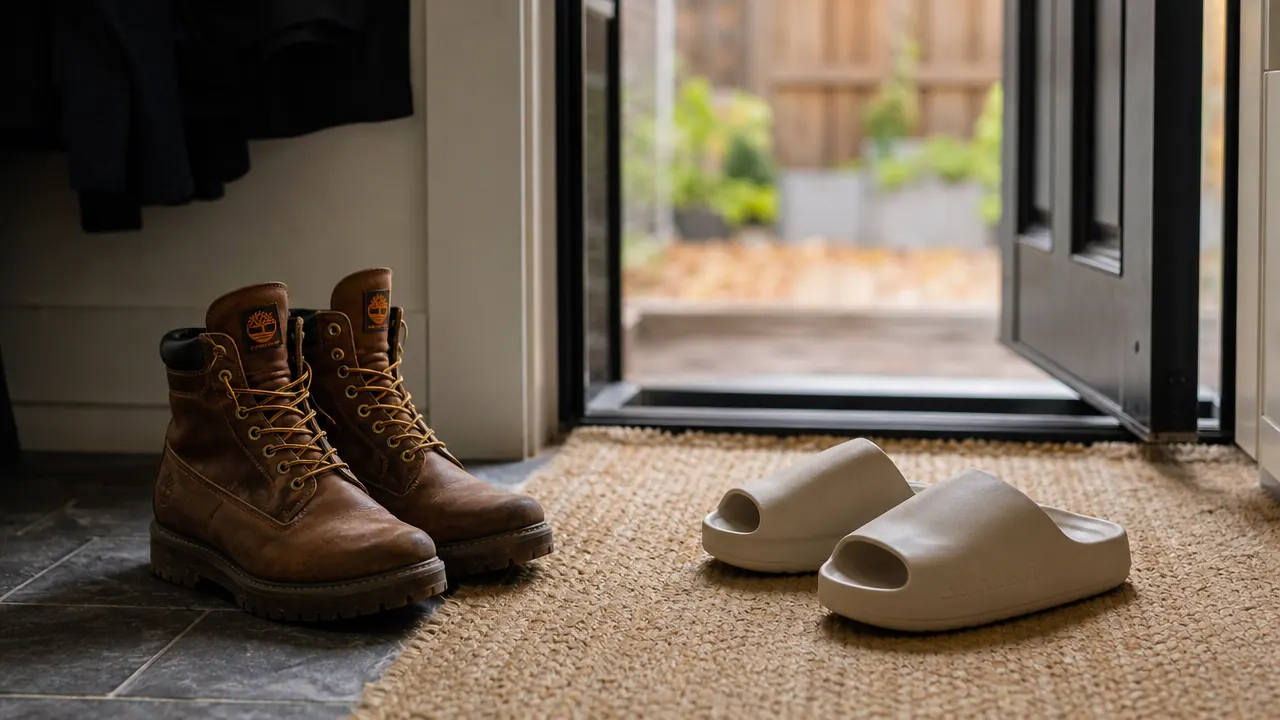
This is the step most people skip because it sounds too simple, and it is also the step that makes the biggest difference to how you feel the next morning. What you wear for the three to five hours after your shift is as important as what you wear during it. Work boots are built for safety, not for recovery. Most supportive athletic shoes are designed to propel you forward, not to offload your plantar fascia while you stand in the kitchen making dinner.
OOFOS OOahh slides are engineered specifically for recovery. Their OOfoam material absorbs 37 percent more impact than standard EVA foam and is shaped to redirect weight away from the heel and forefoot, which are exactly the two points that suffer most with plantar fasciitis. Slip them on the second you walk through the door. Wear them through your evening routine. The difference in how your feet feel the next morning after eight weeks of this habit is not subtle. See the full year-long breakdown at our OOFOS OOahh long-term review.
A quick note on other options: standard flip flops and flat slides actively make plantar fasciitis worse because they force you to grip with your toes to keep the shoe on, which loads the fascia. Crocs are better than nothing, but the foam density isn't optimized for heel offloading. If you're deciding between recovery slide options, the engineering matters. The OOFOS footbed geometry is the main reason foot surgeons and physical therapists recommend them specifically for plantar fasciitis, not just for general soreness.
Step 4: Add Targeted Load at Least Three Times a Week
This one sounds backwards but it's where most people stall. Rest reduces acute pain in the short term, but plantar fasciitis is a load management problem, not just an inflammation problem. The fascia needs progressive tension to remodel and toughen up. Without any loading, it stays irritated and fragile. The goal is controlled stress, not avoidance.
The single best exercise for this is eccentric single-leg heel drops off a step. Stand on the edge of a stair, rise up on both feet, then slowly lower down on the affected foot only, all the way below the step level, over a count of three. Repeat 10 to 15 reps, three sets, three times a week. This exercise has a strong evidence base for plantar fasciitis and Achilles issues. It works because it loads the calf and fascia under tension in the lengthened position, which is exactly the direction the tissue needs to adapt to. Start with bodyweight. If it's pain-free after two weeks, add a light dumbbell. If it causes sharp pain during the exercise, drop to two-legged lowering until the tissue tolerates more.
Runners and gym lifters, note: do not replace your training with this. Add it as a prehab block before your session or after, on separate days. The loading stimulus is different enough that it won't interfere with your other work. Tradespeople and drivers, this is a five-minute block you can do on the stairs at home three evenings a week.
Step 5: Audit Your On-Shift Footwear and Your Floor Surfaces
Even if you nail steps one through four, the gains get erased fast if you spend ten hours on concrete in the wrong shoes. Two things to look at: shoe age and insole type. Most athletic and work shoes lose most of their cushioning and support after 300 to 500 miles or eight to twelve months of heavy use, even if they look fine externally. The midsole compresses and stops absorbing impact. If you can't remember the last time you replaced your primary work shoes, that's your answer.
Insoles make a genuine difference for plantar fasciitis, specifically insoles with semi-rigid arch support, not gel cushion insoles, which feel good but don't actually hold the arch in position. Superfeet Green or Powerstep Pinnacle are the two most recommended by physical therapists. They're affordable and can be moved between shoes. The arch support changes the mechanics of how load distributes across the fascia, which means less cumulative irritation per step across an eight-hour shift. That adds up fast when you're taking 10,000 to 15,000 steps a day.
Anti-fatigue mats for workstations and kitchen floors are a legitimate add if you stand in one spot for long periods. They reduce the static compression load on the heel significantly compared to bare concrete or thin tile. Not glamorous, not expensive, and they work. This is the kind of unglamorous optimization that separates people who recover from plantar fasciitis in three months from people who deal with it for three years.
What Else Helps: The Supporting Cast That Speeds Things Up
The five steps above are the protocol. These extras are not required but they accelerate results when layered on top. Ice rolling: freeze a water bottle and roll your arch over it for five minutes after high-load days. This reduces local inflammation and feels noticeably good. Massage: a lacrosse ball or golf ball under the arch, five minutes of slow rolling pressure, two to three times a week. It loosens the fascia from below rather than just stretching from above. Body weight: every ten pounds of extra bodyweight is measurably more load through the plantar fascia with each step. If weight is a factor for you, it's one of the highest-leverage changes you can make.
Sleep and recovery nutrition matter too. Plantar fasciitis is partly a repetitive stress injury, meaning the tissue needs deep sleep to remodel between loading sessions. If you're sleeping five hours a night and eating mostly processed food, the healing rate slows down. This isn't about perfection. It's about giving your body a fighting chance to adapt between shifts. For a deeper look at how recovery slides fit into a broader foot-care routine, check out our breakdown of 10 reasons recovery slides help sore feet after work.
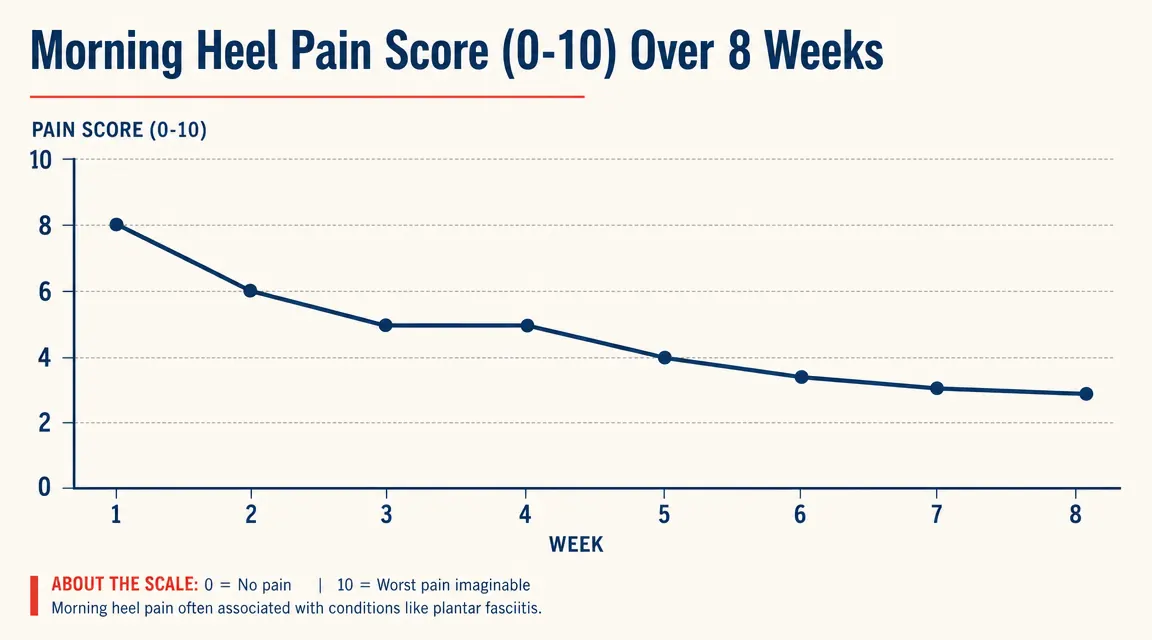
One thing to be honest about: this protocol takes eight to twelve weeks to produce consistent, durable results. Week two usually feels worse than week one because you're loading tissue that's been babied. Weeks three and four often feel like a plateau. The people who break through that plateau and stop having plantar fasciitis as a chronic issue are the ones who keep doing the stretches, keep wearing the recovery slides, and keep doing the heel drops even when progress feels invisible. The biology is slow. The protocol isn't complicated. The constraint is consistency.
Start with the footwear swap tonight, the rest follows
The OOFOS OOahh Recovery Slide is the one tool in this protocol you use every single day without any extra time investment. You'd be putting something on your feet anyway. This is the right thing to put on them. 4.4 stars across 32,000-plus reviews. Multiple color options and widths available.
Amazon Check Today's Price on Amazon →