

My lower back has been the most expensive thing I own. Two disc flare-ups in six years, a round of physical therapy that cost more than my truck payment, and a chiropractor visit I still think about when I sign checks. I do concrete and framing work, which means I spend most of my shift bent forward, lifting, or twisted in a way no physical therapist would approve of. So when my buddy Marco told me he had been wearing a Sparthos back brace every day for two months and his sciatica was 'a solid three out of ten instead of a seven,' I paid attention. I bought one the same night.
That was about three months ago. I have worn the Sparthos brace through concrete pours, wall framing, a long drive back from a job site in Nevada, and a six-week stretch after my L4-L5 disc decided to remind me it exists. I am going to tell you what changed, what did not, what I wish I had known on day one, and who should skip this thing entirely.
The Quick Verdict
A genuinely useful lumbar brace for working adults with repetitive lower back stress, as long as you learn the fit and do not treat it as a substitute for core work.
Amazon Check Today's Price →Your lower back does not get a sick day. Here is the support that goes to work with you.
The Sparthos back brace has over 66,000 Amazon reviews and is budget-friendly. Check current availability and sizing options before stock changes.
Amazon Check Today's Price on Amazon →How I Have Used It Over Three Months
Week one I wore it constantly, which was a mistake I will get to. By week two I had a system: brace on before I left the truck, off during any extended break over thirty minutes to let my core breathe, back on for the heavy lifting windows. That is the rhythm that stuck. I am 6'1", 215 lbs, and ordered a Large, which fit my 36-inch waist with room to tighten on bad days and room to loosen when I was sweating through a summer pour.
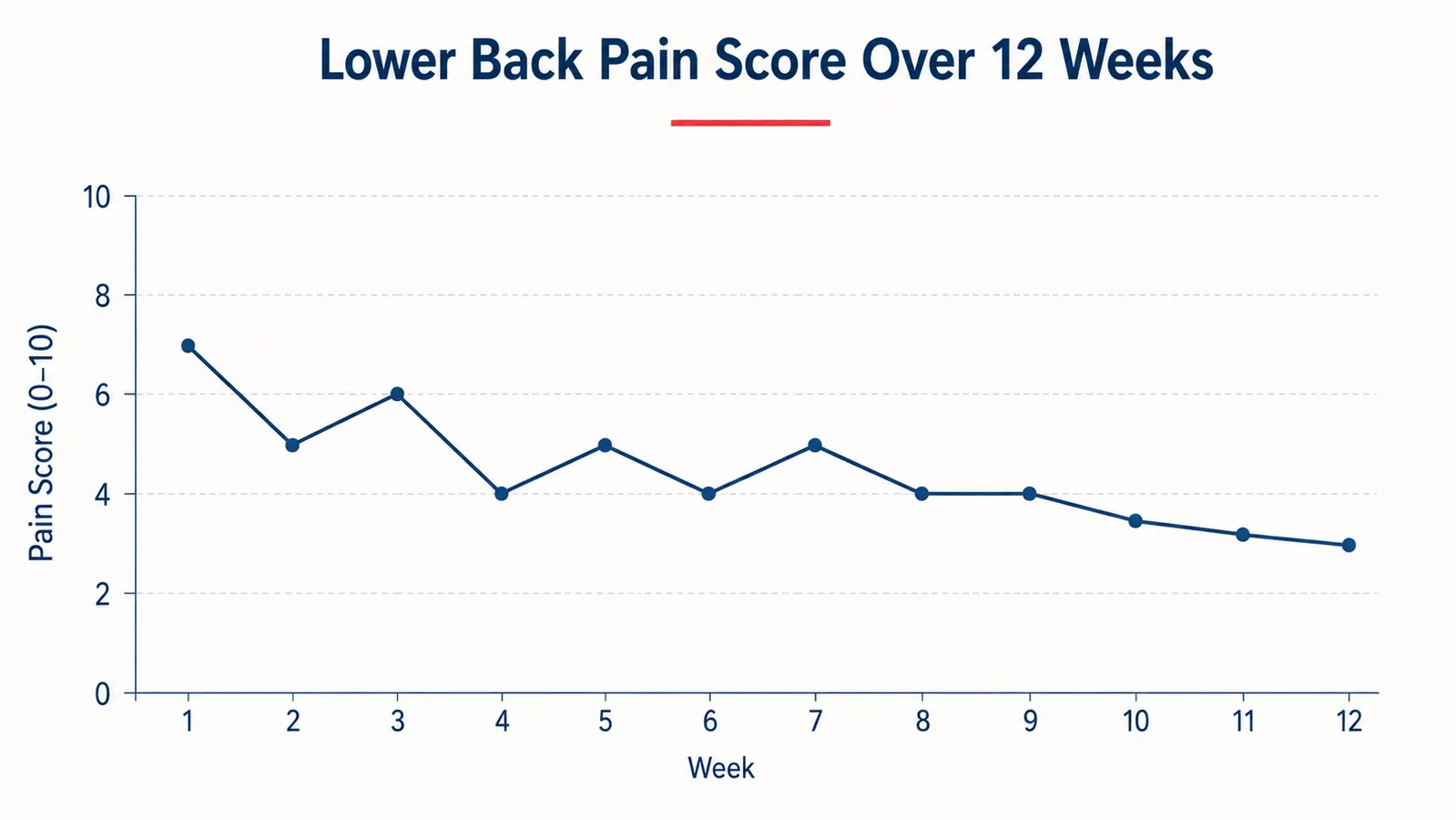
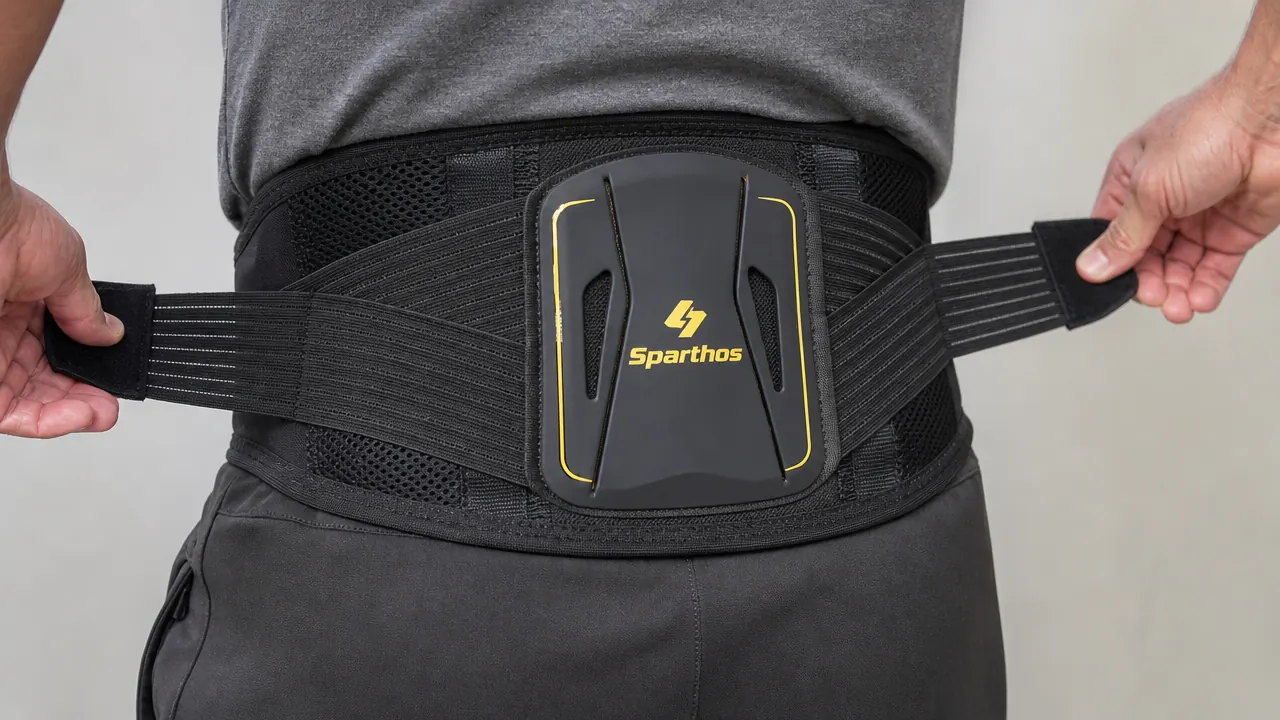
The Sparthos brace uses dual side-pull straps that tighten after you wrap the main closure. The lumbar pad is molded, semi-rigid, and positions itself in the natural inward curve of the lower back rather than sitting flat like a foam belt. That matters a lot for comfort over a full shift. I have worn foam belts that felt like a cutting board by hour four. The Sparthos still felt okay by hour six, which is the longest I wore it in a day.
The breathability is marketed heavily and it is partly true. The mesh back panel makes a real difference in late spring and summer compared to solid neoprene belts. But at 90 degrees on a slab pour, you are still sweating under it. It just does not trap quite as much as the old belt I had. I washed it once a week by hand and it dried overnight without losing shape.
What Changed by Week Two
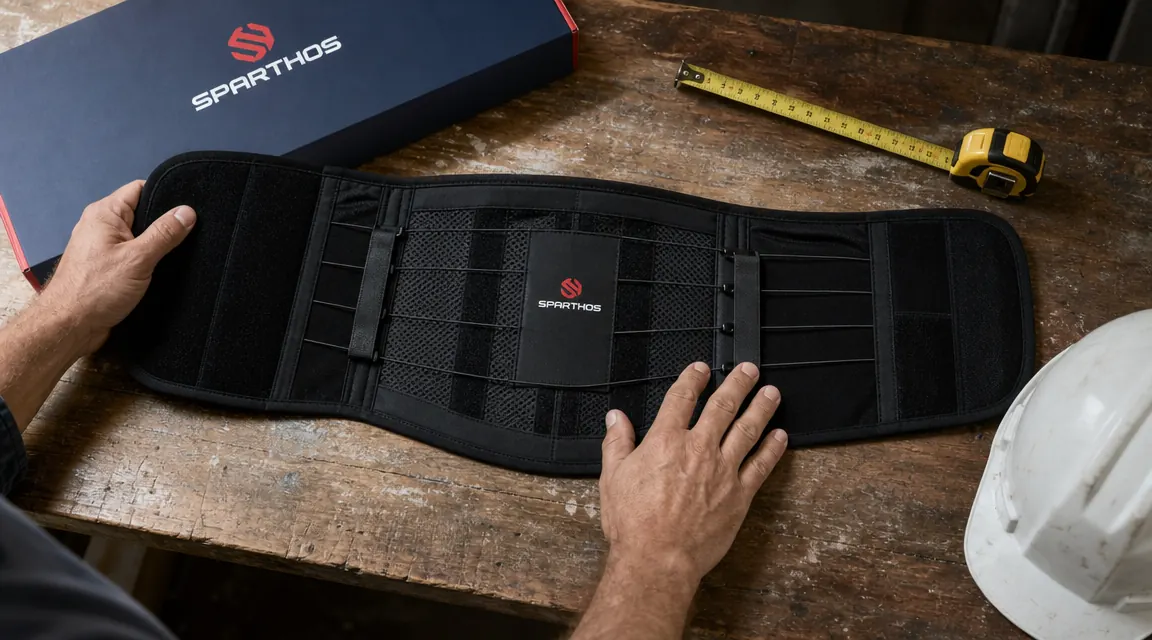
I started tracking my pain on a simple 1-10 scale every morning when I got out of bed. Day one was a 7. By the end of week two I was consistently at a 5, which does not sound dramatic until you realize that 5 is the difference between gritting through the first hour versus being able to bend down and tie your boots without planning the movement.
The brace does not eliminate pain. It changes the character of it. Without the brace, my lower back pain was sharp and unpredictable, the kind that arrives mid-lift and makes you freeze. With the brace worn tight, the sharp spikes mostly stopped. What I felt instead was a dull ache that was manageable and predictable. That is the real value for anyone doing manual work: predictable discomfort beats surprise pain every time.
Without the brace, the pain was sharp and unpredictable. With it worn tight, the spikes mostly stopped. Predictable discomfort beats surprise pain on a job site every single time.
By the end of month one, my morning score had settled at 4. I was moving better, loading faster, and spending less time standing around waiting for a pain window to pass. The disc flare that hit around week six pushed things back to a 6 for about ten days, but the brace got me through that stretch without missing shifts.
The Lumbar Pad and Fit System: Where Sparthos Gets It Right
The molded lumbar pad is the thing that sets this brace apart from the budget Amazon belts. It sits in the lordotic curve of the spine rather than pressing flat against it. For sciatica, that positioning matters because it takes pressure off the lumbar nerve roots in the same way a good chair lumbar does. I am not a physical therapist, but I know what my back feels like when support is seated correctly versus when I am just wearing a tight band. The Sparthos is seated correctly.
The dual strap system lets you adjust compression independently from the wrap. Most cheap braces give you one big velcro panel and you either have it tight or loose. The Sparthos lets you set the base position snug and then pull the two upper straps to add targeted compression when you are about to do a heavy lift. In practice this means the brace is comfortable to wear all morning and you dial it up for the moments that actually need it. I used this constantly during wall lifts.
Where It Falls Short After Three Months
The velcro starts to show wear after about six weeks of daily use. Mine collected concrete dust and drywall fiber in the hooks, which reduced grip. A quick cleaning with a stiff brush restored it about 80 percent. By month three the grip is noticeably weaker than new, especially the small secondary straps. If you are a daily wearer in a dusty trade environment, budget for a second brace around the four-month mark.
The brace does not do anything for upper thoracic tension. If your pain pattern runs from the lower back up into the mid-back or shoulder blades, the Sparthos stops at the right level but does not address anything above the beltline. I have a friend who is a warehouse picker and her pain was more T8-T10 range. The brace did not help her much. It is designed for L1 through L5 and it is honest about that.
There is also a dependency risk. I wore it too much in the first two weeks and noticed my core felt lazy when I took it off. The brace does some of the stabilization work your deep core muscles are supposed to do, and if you let them check out completely for weeks at a time, you come back weaker. I added a ten-minute core routine on off days and that fixed the regression, but it is worth knowing upfront.
What I Liked
- Molded lumbar pad actually seats in the spine's natural curve, unlike flat foam belts
- Dual adjustment straps let you dial up compression only when you need it for heavy lifts
- Mesh back panel makes a real difference in heat and sweat management versus neoprene
- Holds its structure through a full 6-8 hour shift without riding up or shifting
- Affordably priced at current price, which is hard to beat for a brace that actually does its job
- 4.4 stars across 66,000 reviews with strong consistency in the lumbar support category
Where It Falls Short
- Velcro weakens faster than expected in dusty trade environments, plan on replacing around month 4
- Does nothing for pain above the lumbar region, not a full-back solution
- Wearing it too much without supplemental core work leads to noticeable core atrophy
- Can feel suffocating in temps above 85 degrees despite the mesh panel
- Sizing tends to run slightly small on wide torsos, measure before ordering
Comparing It to What I Used Before
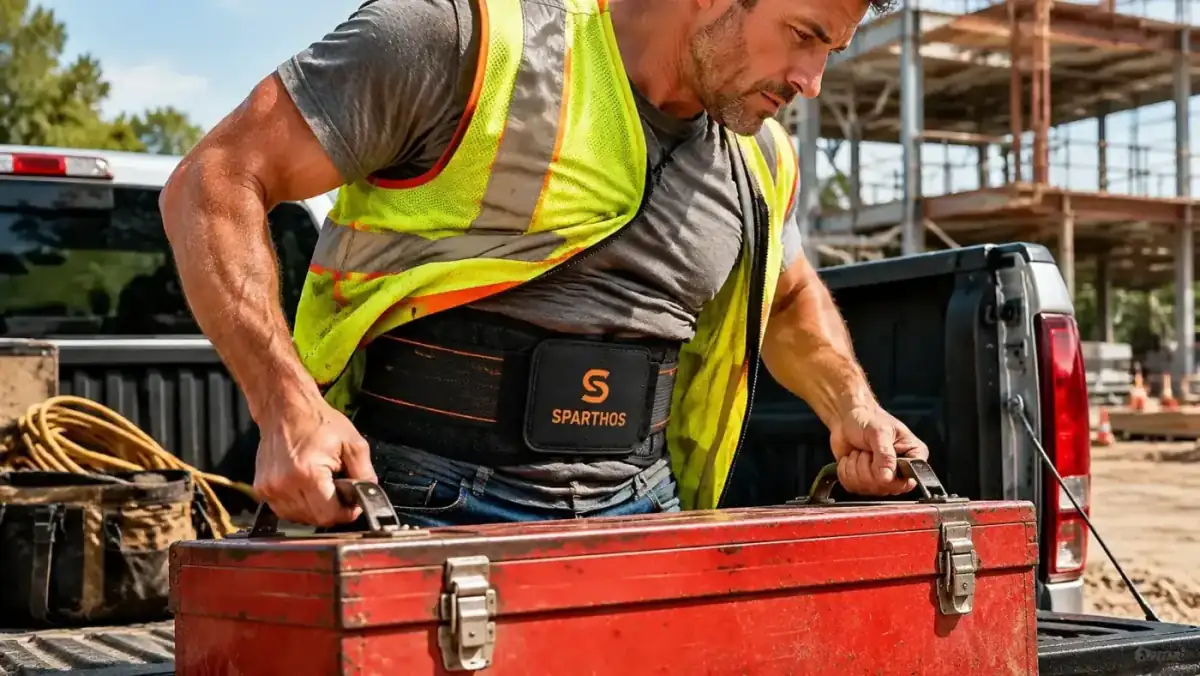
Before the Sparthos I had a neoprene construction belt I got at a big-box hardware store for about the same price. The hardware-store belt was stiffer and held compression well, but it was completely flat against the back and did not conform to a curve. By hour three it was pressing on the wrong spots and actually made my sciatic nerve more irritated, not less. I also ran hot in it from day one.
I have also tried the Mueller 255 lumbar support briefly. Mueller is a solid brace and if you want a direct comparison, I cover that in depth in the Sparthos vs Mueller lumbar comparison. Short version: Mueller is slightly more rigid and better for post-surgery or medical-grade support needs. Sparthos is more comfortable for all-day wear on a working body that needs to move freely.
Who This Is For
If you do repetitive bending, lifting, or sitting in a fixed position for long stretches, and your lower back pain is in the L1-L5 range, this brace is worth every cent. Construction workers, warehouse pickers, drivers, nurses doing patient transfers, gym lifters with a disc issue that flares on deadlift day. If your pain is a 5 or above on a normal day and you have been grinding through it, the Sparthos will likely take you down two to three points and keep it there as long as you wear it consistently. You might also find it useful just for heavy-lifting days at the gym, which is a common use case in the reviews. And if you want more context on why lumbar braces work when used right, check out the ten reasons a back brace helps lower back pain breakdown.
Who Should Skip It
Skip it if your pain is above the lumbar region, if you have an acute injury that requires imaging and a doctor's clearance, or if you are looking for a brace you can wear 10-plus hours a day without any core maintenance. This is a tool that works best when it is one part of a routine that also includes some form of core strengthening, regular movement breaks, and attention to posture. If you want a magic compression belt that does all the work while you ignore everything else, you will be disappointed within the first month, and your core will be worse off for it.
Three months in, I still put this on before I get out of the truck. That is the answer.
The Sparthos back brace is consistently in stock on Amazon and ships fast. If you are between sizes, size up. Check today's price and confirm availability below.
Amazon Check Today's Price on Amazon →