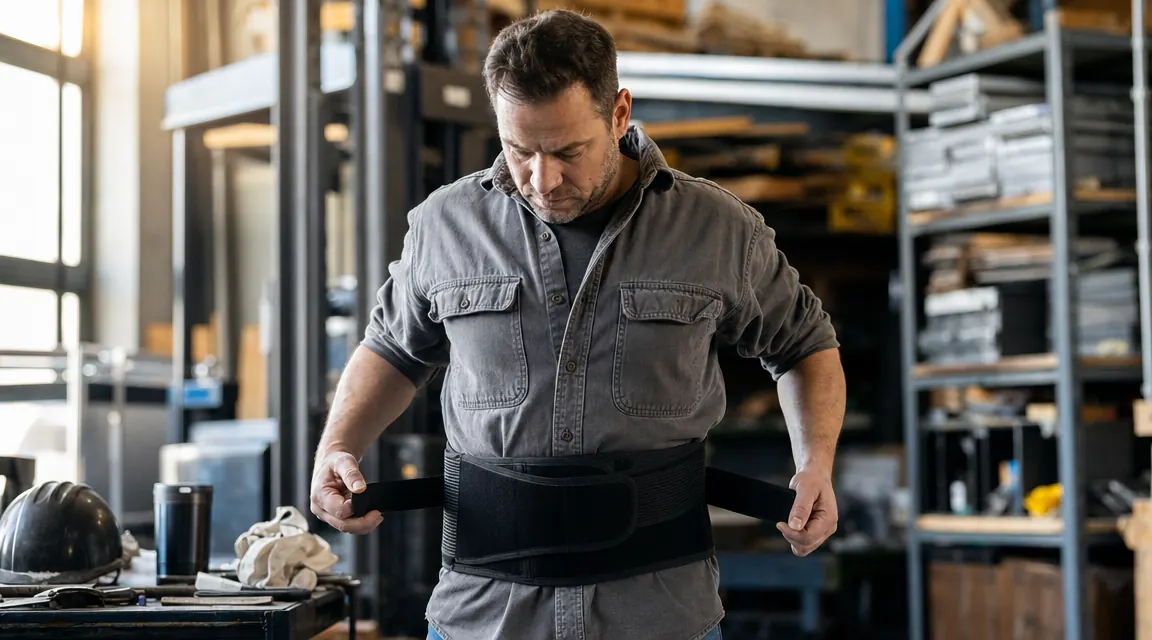
I spent three months skeptical about back braces. My lower back had been grinding on me since a heavy deadlift session in February, and every time I Googled my way to a lumbar support, I got either a PT telling me to just "strengthen your core" or an Amazon listing full of five-star ratings that read like they were written by the same person. What finally moved me was a coworker who drives a truck 10 hours a day and swears his Sparthos brace is the reason he still has a job. So I tried one. Eight weeks later, here is what I can tell you about the 10 things a back brace actually does, from someone who had very low expectations.
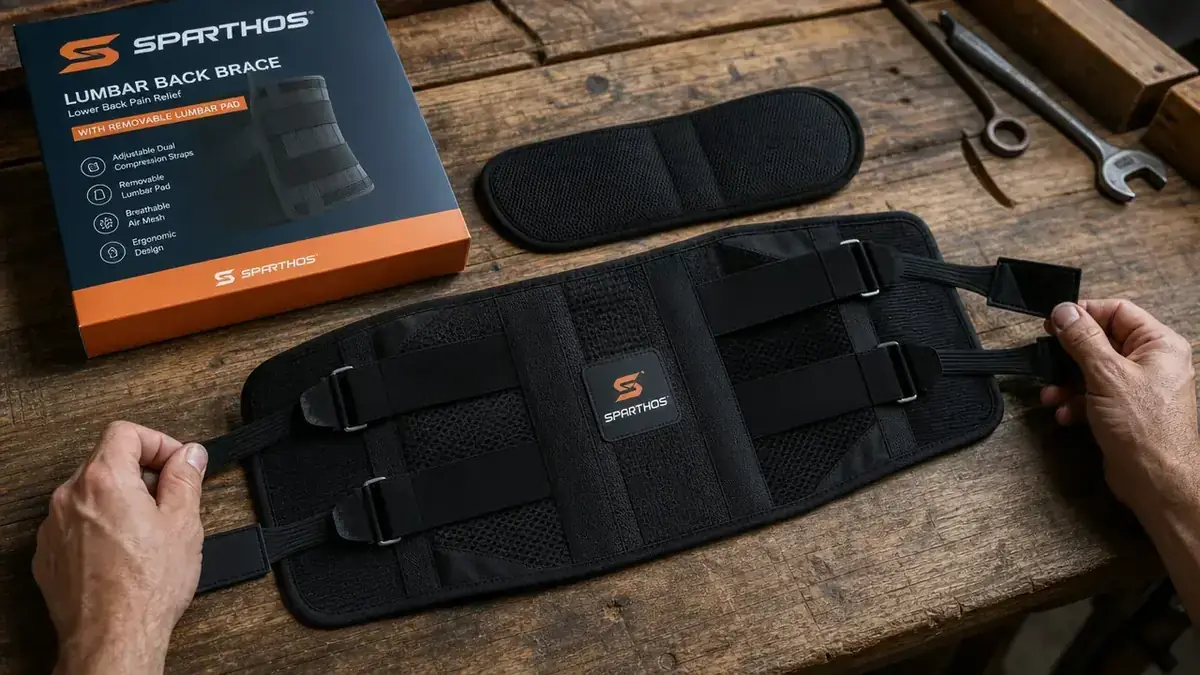
One thing upfront: the Sparthos back brace is the one I tested and the one I recommend here. It has a 4.4-star rating across nearly 67,000 reviews, which is not a fluke. It is the brace that fits the working-body use case closest, with a removable lumbar pad, breathable mesh panel, and a cinch system you can actually adjust mid-shift without taking it off. I will call it out by name where it is relevant. If you want the full long-term breakdown, read my Sparthos back brace review after three months of daily use.
If your lower back is costing you shifts, here is the brace that fixed it for me.
The Sparthos lumbar brace has a removable pad, a breathable back panel, and cinch straps you can tighten with one hand. It is the only brace I have worn for longer than a week without it riding up or cutting into my hips.
Amazon Check Today's Price on Amazon →10 Reasons a Back Brace Actually Helps
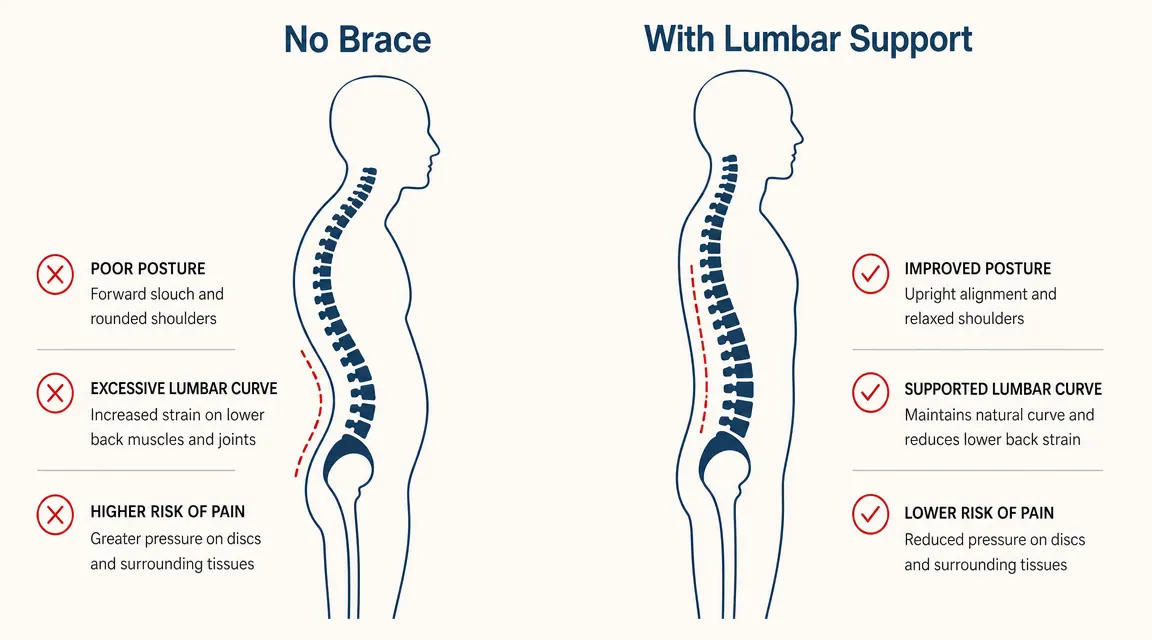
It Forces Your Spine Into a Position It Has Forgotten
After years of sitting in a truck cab or hunching over a counter, your lumbar spine stops holding neutral on its own. A good brace creates a physical reminder, a gentle wall that catches your posture before it collapses. You do not have to think about it. Your back learns where it is supposed to be, and over weeks, you start holding that position a little longer even when the brace is off.
It Takes Compression Load Off Your Lumbar Discs
When you are on your feet for eight hours or driving with a bad seat, the discs between your lumbar vertebrae absorb a lot of compressive force. A lumbar brace with a rigid or semi-rigid back panel shares some of that load through the surrounding musculature and the brace structure itself. Less disc compression means less end-of-day pain for most people with general lumbar fatigue.
It Cuts the Acute Pain Signal During Movement
The compression and warmth from a lumbar brace can dull the pain signal during the movements that set you off most: bending to pick something up, twisting to hand something to a patient, climbing in and out of a cab. It is not a cure and it does not fix the underlying issue. But if you need to get through a shift without wincing every ten minutes, reducing that acute signal is worth a lot.
It Reduces Muscle Guarding After an Injury
When your back has been hurt, the surrounding muscles tighten up defensively. That guarding is protective in the short term, but chronic muscle tension around an already-painful joint makes everything worse. The gentle, consistent compression from a brace can calm that reflex bracing a little, letting the muscles relax enough to actually move without spiking.
It Makes You More Aware of the Movements That Hurt You
This one surprised me. Once the brace is on, you become weirdly aware of how you are moving. You notice when you are about to twist wrong. You slow down before picking something up off the floor. The brace is a tactile cue. That awareness alone, separate from anything structural, protects your back from a lot of the thoughtless microdamage that accumulates over a long shift.
It Lets You Stay Active Instead of Shutting Down
The old advice was to rest a bad back. The current research is pretty clear that movement is better than bed rest for most lower back pain. A brace lets you stay mobile without every movement being a gamble. You can keep walking, keep working light tasks, keep doing the things that keep blood flowing to the area. That active recovery is faster than two weeks on the couch.
It Warms the Lumbar Tissue During Sustained Postures
The neoprene or breathable mesh wrap on a lumbar brace retains body heat. Warm tissue is more pliable and less prone to micro-tearing. For people doing repetitive bending or sitting for long stretches, that retained warmth is meaningful. The Sparthos uses a mesh back panel so it does not become a swamp after an hour, but it still holds enough heat to keep the tissue loose.
It Extends the Window Before Pain Becomes Unmanageable
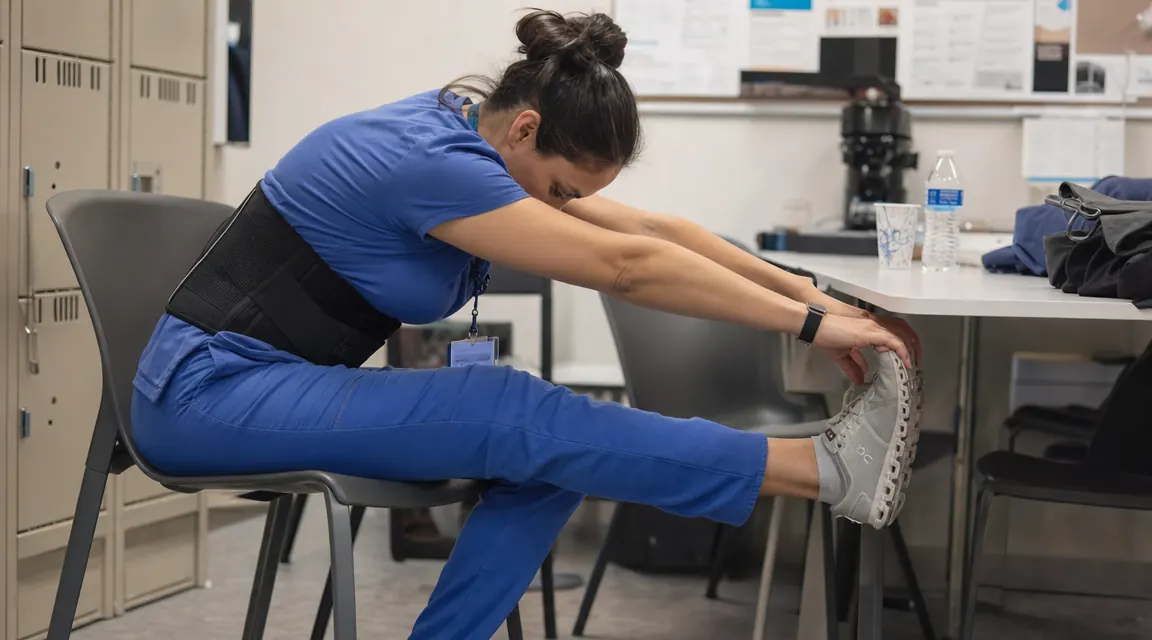
For a lot of working adults, back pain is not a constant 8 out of 10. It is a slow build across a shift. Hour one is fine, hour five is rough, hour eight is brutal. A brace shifts that curve. You might go from fine-to-brutal in eight hours to fine-to-manageable in ten. That extra window is the difference between leaving early and finishing your shift.
It Is a Low-Risk First Tool Before Bigger Interventions
If your back is bad enough that you are thinking about cortisone shots or surgery consultations, a lumbar brace at a low price is a sensible first step. It costs less than one co-pay. It is non-invasive. And if it gives you enough relief to get to PT, build some core strength, and address the real cause, then you may never need to escalate. Most people who find real relief from a brace are not brace-dependent forever. They use it while they fix the underlying weakness.
It Works Immediately, Not After Four Weeks of Loading
Strengthening your core is the right long-term fix. But a 12-week core program does not help you finish Tuesday's shift. A brace works on day one. That immediate feedback matters for consistency. When you get relief fast, you are more likely to keep addressing the problem, keep showing up to PT, and keep building the strength that eventually means you do not need the brace anymore.
What I'd Skip
Skip the brace if your back pain is new and you have not ruled out a fracture, a nerve root issue causing leg weakness, or numbness that is spreading. In those cases, you need a diagnosis before you put a compressive device on your spine. Also skip it if you are planning to use it as a substitute for building any core strength at all. I have watched people become completely dependent on a brace because they never addressed the weakness underneath. The brace is a bridge, not a destination. Also skip the cheap, one-size, purely elastic belts with no lumbar insert. They compress without supporting. The Sparthos works because of its removable lumbar pad. That pad is the whole point. If a brace does not have one, you are mostly just wearing a wide elastic band. If you are trying to decide between a basic belt and the Sparthos, read my guide to managing sciatica through a full work shift first, because the brace is only one piece of it.
The brace is a bridge, not a destination. Wear it to get through the shift. Strengthen the core so you eventually do not need to.
Still dealing with lower back pain eight hours into a shift? This is the brace I reach for.
The Sparthos lumbar brace fits under most work shirts and uniforms, adjusts while you are wearing it, and costs less than a single co-pay. It is the highest-reviewed lumbar brace on Amazon for a reason.
Amazon Check Today's Price on Amazon →