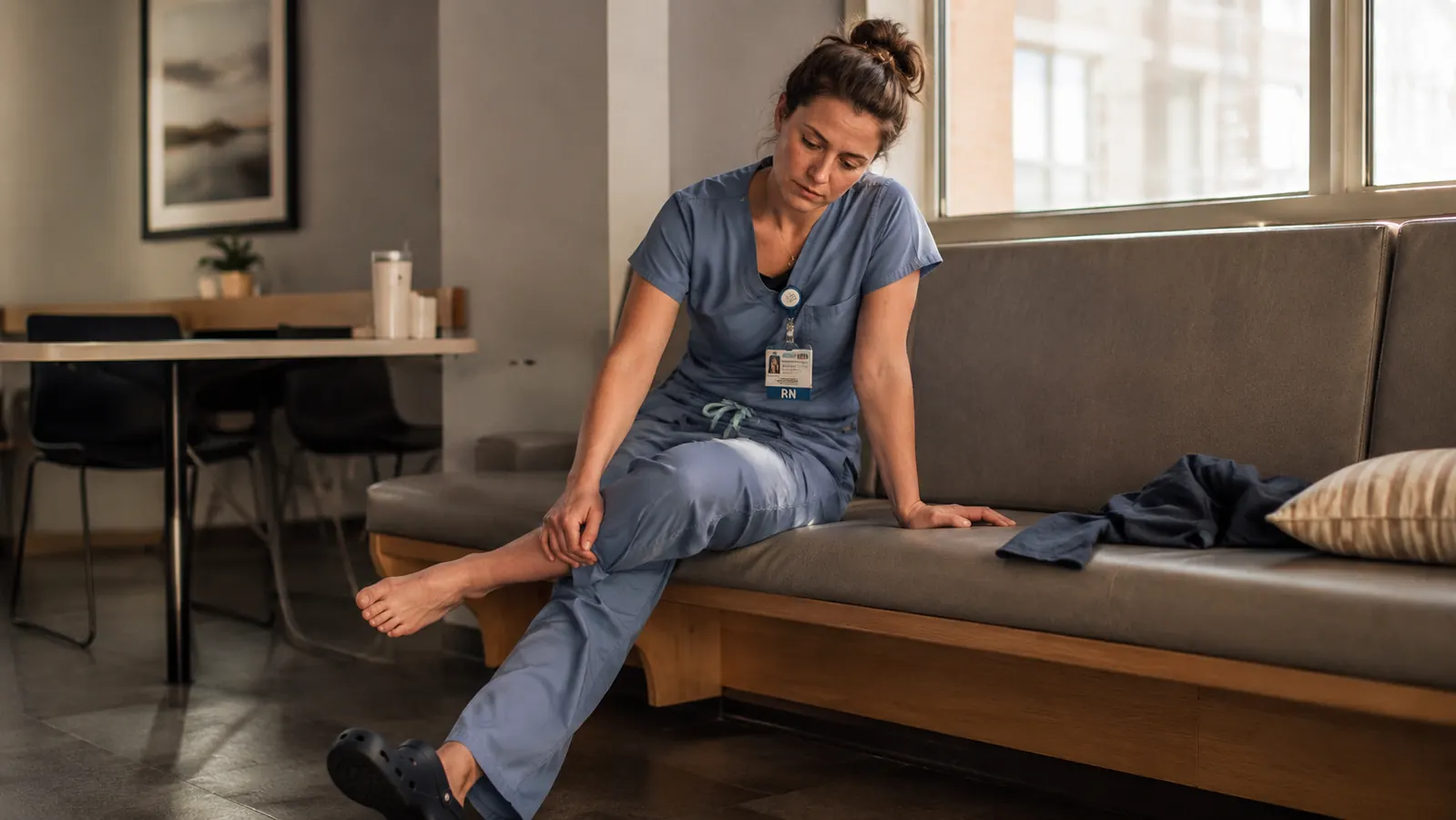
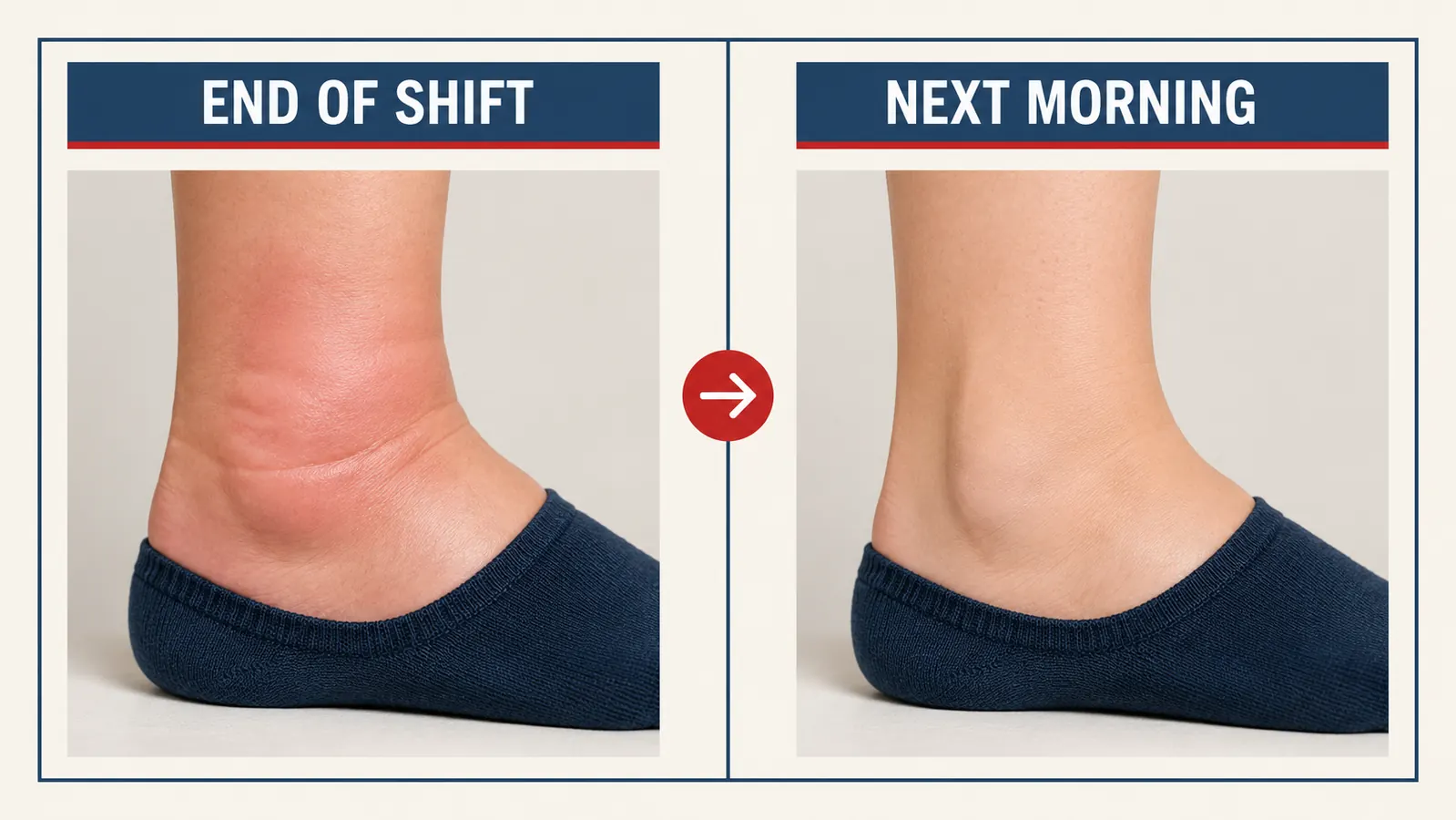
You know the feeling. You get home after a 10-hour shift on concrete or linoleum, sit down to take off your shoes, and your ankles have turned into something that belongs on a medical school poster. Not injured. Just wrecked. Nurses, truck drivers, warehouse workers, line cooks, retail staff , anyone who earns a living on their feet knows this version of tired. Your legs ache from the knee down, socks leave marks that last an hour, and by the time you actually get to sleep, the swelling has barely moved.
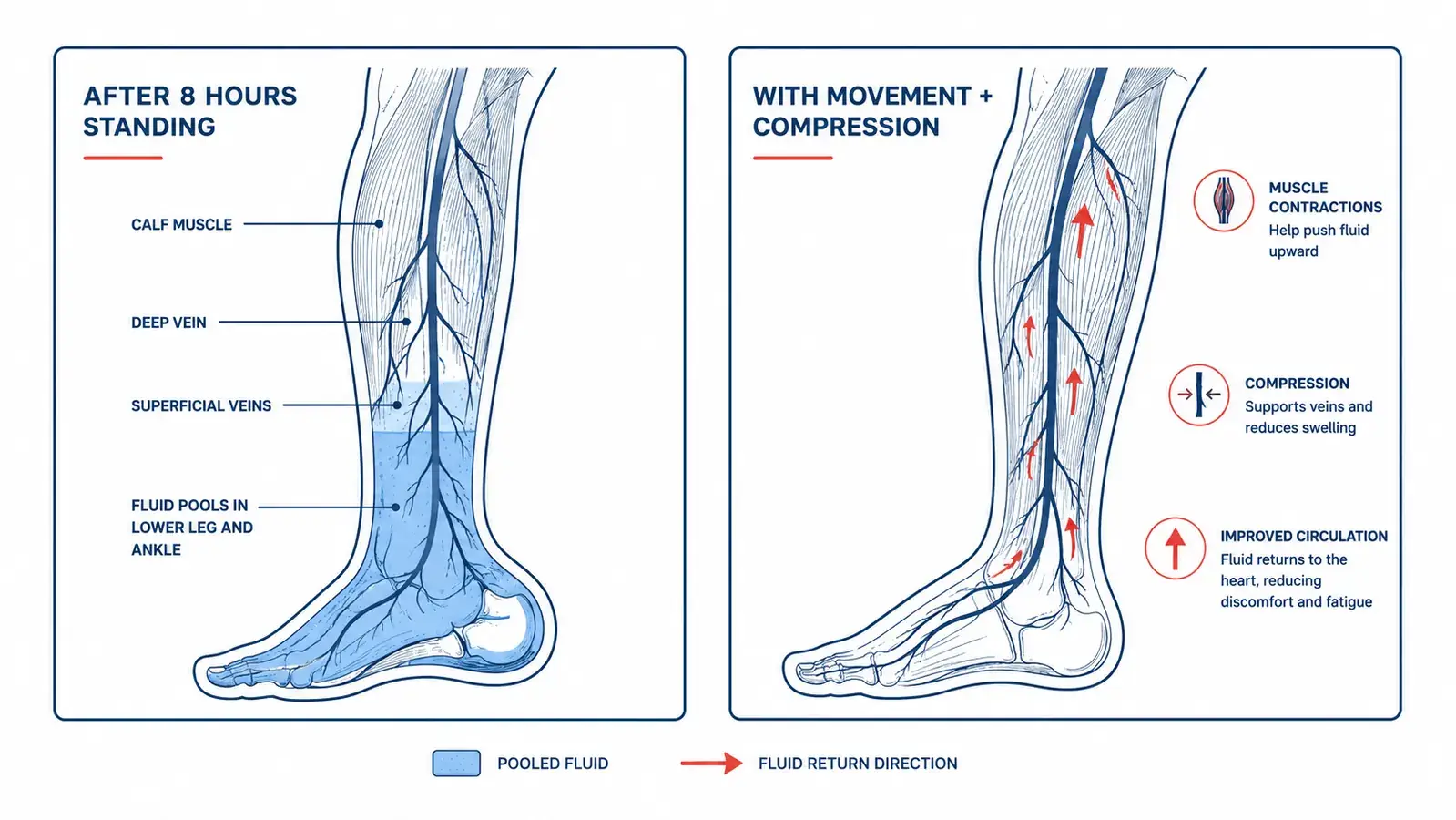
Here is the thing most people get wrong: they treat the swelling like it is the problem. It is not. It is the symptom. Gravity plus prolonged static standing equals fluid that pools in your lower legs because your calf muscles are not pumping it back up. Fix the pump, manage the pressure, and the swelling goes down. Fast. This guide covers five steps that actually do that , in the right order, with real timing, including the one tool that makes the biggest difference if you use it correctly.
If you stand for a living, your socks should be working as hard as you do.
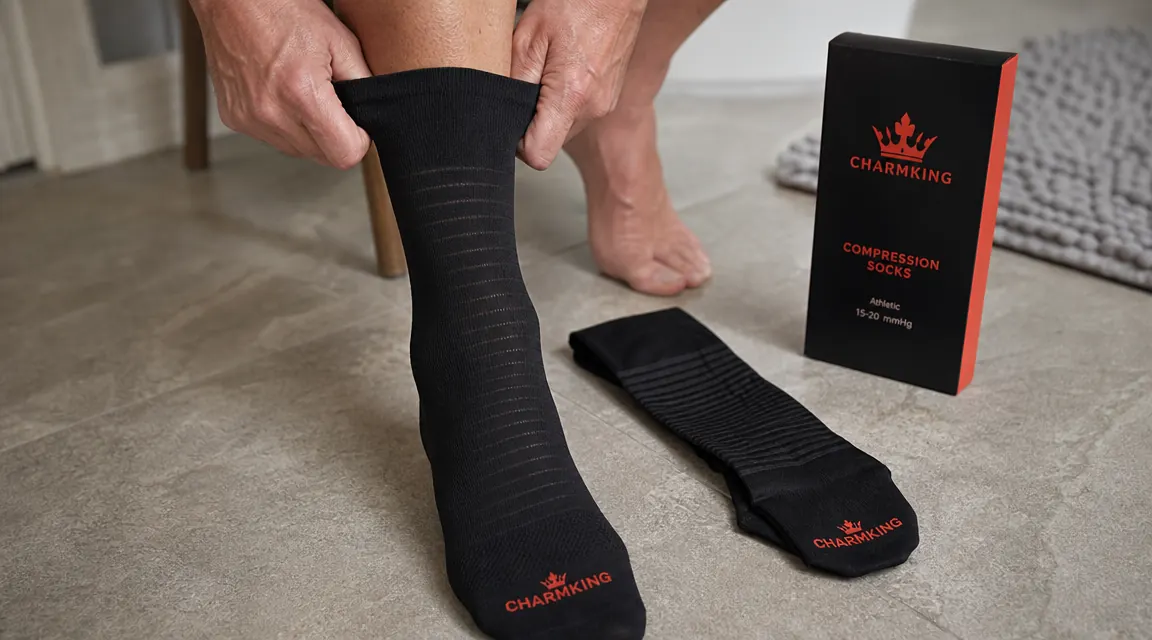
CHARMKING compression socks (15-20 mmHg graduated compression, 8 pairs, budget-friendly) are the most practical first step in this protocol. They work by actively pushing fluid back up from the ankle during every step you take. Check current price on Amazon before you read further.
Amazon Check Today's Price on Amazon →Step 1: Put On Compression Socks Before the Swelling Starts
This is the step almost everyone skips, and it is the most important one. Compression socks do not undo swelling very well. They prevent it. The graduated compression in a 15-20 mmHg sock is tightest at the ankle and gradually relaxes toward the knee. That pressure gradient actively works with every muscle contraction in your calf to push blood and interstitial fluid upward instead of letting it pool at your ankles. But once the fluid is already sitting there, the sock is fighting a much harder battle.
Put them on in the morning, ideally before you stand up from bed. If that feels like a lot, at minimum get them on before your commute or before the first hour of your shift. The CHARMKING socks have a 15-20 mmHg compression rating, which sits in the sweet spot for occupational swelling: firm enough to make a real difference, not so tight that circulation becomes the concern. Wear them through your entire shift. Take them off when you get home and elevate , do not keep them on all evening.
If you are a nurse or work in a facility with dress-code requirements, CHARMKING sells these in solid blacks, whites, and neutrals that pass most uniform checks. You are not sacrificing compliance to use them.
Step 2: Move Your Ankles Every 45 to 60 Minutes During Your Shift
Static standing is worse than walking for leg swelling. When you stand still, your calf muscles are not contracting, which means the venous pump in your legs is essentially off. Your heart keeps pushing blood down. Nothing is sending it back up efficiently. The fix is simple but requires you to actually remember to do it: every 45-60 minutes, take two to three minutes to walk, do 20 calf raises, or at minimum roll your ankles in circles a few times if you are stuck at a station.
If you work in a job where you cannot easily walk around, toe raises work well. Stand flat on the floor, raise your heels so you are on your toes, hold for two seconds, lower slowly. Twenty reps takes about 90 seconds and activates the exact muscle group that drives fluid back up your leg. Set a phone alarm or use a shift milestone (every time you check in, every break, every handoff). The reminder system matters more than the exercise itself.
Step 3: Hydrate More Than You Think You Need To
Counter-intuitive, but dehydration makes leg swelling worse, not better. When you are dehydrated, your body holds onto sodium to protect cell function, and sodium drags water into the interstitial tissue around it. The result is fluid retention that shows up most dramatically in the lowest points of your body. For someone on their feet all day in a warm environment, this is almost always the ankles and calves.
The target is roughly half your body weight in ounces per day. So a 180-pound person is aiming for 90 oz. That is about 11 cups or just under three liters. If you are working in a hot environment, add 16-24 oz for every hour of significant sweating. For practical purposes: drink before you feel thirsty. By the time thirst kicks in you are already behind. Keep a water bottle visible at your station and drink from it at every movement break from Step 2.
Step 4: Elevate Immediately When You Get Home
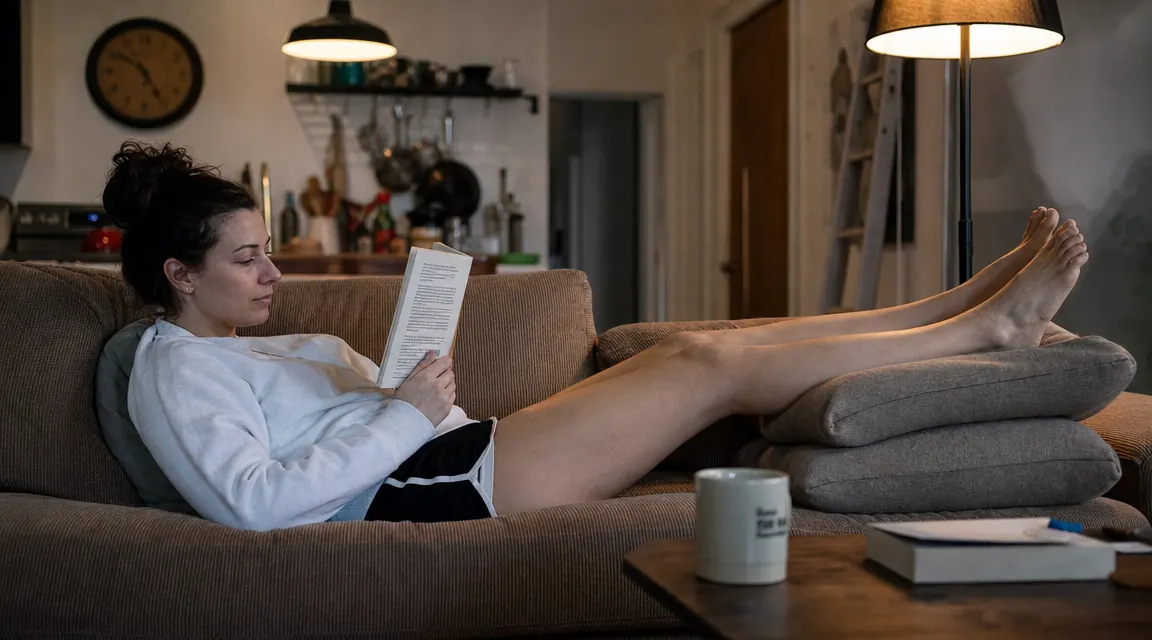
Elevation is the fastest mechanical lever you have for moving fluid that has already pooled. The goal is to get your feet above your heart. That means lying flat and putting your legs on something that raises your feet to at least 12-18 inches above your chest level. Propping your legs on the couch armrest with your torso upright does not count. You need to be horizontal.
Stack two firm pillows under both legs, lie on your back, and stay there for at least 15-20 minutes. Do this within 30 minutes of getting home, before you sit down to eat or watch TV in a chair. The fluid moves fast when you are horizontal. Most people notice a visible difference in ankle puffiness within 20 minutes if they do this correctly. Add a cold pack to the ankle area (not skin-direct, wrap in a cloth) to get mild vasoconstriction that speeds drainage further. This is not complicated. It just requires you to do it before you crash on the couch in a sitting position.
Step 5: Cut Sodium in the Two Hours Before Bed
The food you eat in the evening has a direct effect on how much overnight swelling you retain. Sodium from salty snacks, fast food, canned soups, deli meats, or anything processed causes your kidneys to hold onto water to maintain electrolyte balance. That retained water has to go somewhere, and after you have been on your feet all day and your vascular permeability is elevated, it tends to head straight to the lower legs.
You do not have to eat bland food forever. The practical version of this is just to be deliberate in the two hours before bed. Avoid the bag of chips, the high-sodium snack, the drive-through run you grab on the way home. If you are eating a real meal in that window, stay under 600 mg of sodium in that meal. A banana or a small amount of potassium-rich food in that same window helps because potassium counteracts sodium's fluid-retaining effect. One banana, a handful of edamame, or even a serving of low-sodium nuts will do it.
Putting on compression socks in the morning is the most important thing you can do. They prevent pooling. They do not undo it. By the time you sit down at the end of your shift, they are already eight hours behind.
What Else Helps (And What Does Not)
A few things people try that actually move the needle, in order of impact after the five steps above. Anti-fatigue mats on hard floors reduce the static pressure on your feet and improve micro-movement throughout the day, which keeps the calf pump slightly more active than standing on concrete. Worth it if your employer will allow it. Magnesium glycinate at 200-400 mg before bed reduces overnight muscle cramps that often accompany leg fatigue and swelling, and the evidence on magnesium for general fluid balance is decent. Cold water immersion (a tub of cool water, not ice) for the feet and calves for 10-15 minutes post-shift is simple and works if you can tolerate it. On the ineffective side: compression wraps applied post-swelling without elevation first do not work well. Diuretics for occupational swelling are an overreaction. And sleeping with just one pillow under your feet does almost nothing if you are not actually horizontal.
The protocol that consistently works for people who do this job long-term is compression in the morning before the shift, movement breaks during it, hydration throughout, then elevation plus sodium management in the evening. Stack all five and you will feel a difference in three to five days. Most people notice real overnight recovery improvement within two weeks. If swelling is still significant after two weeks of consistent effort, or if you have pitting edema (you press your finger into your ankle and the indent stays for several seconds), see a doctor. That can indicate a circulatory issue that goes beyond occupational swelling.
For a full breakdown of why compression socks work at the physiological level and how to pick the right mmHg for your situation, see the companion piece: 10 Reasons Compression Socks Help When You Stand All Day. And if you want to know whether CHARMKING specifically holds up over six months of 12-hour nursing shifts, the long-term review covers that in detail: CHARMKING Compression Socks Review: Six Months on a Nurse's Feet.
Your legs are done absorbing the punishment. Give them the one thing that actually helps during the shift.
CHARMKING compression socks run 15-20 mmHg graduated compression and come in an 8-pair pack so you always have a clean pair ready. Rated 4.5 stars across 88,000+ reviews from nurses, drivers, and people who spend their shift on hard floors. Check today's price on Amazon.
Amazon Check Today's Price on Amazon →